
Last updated October 16, 2026
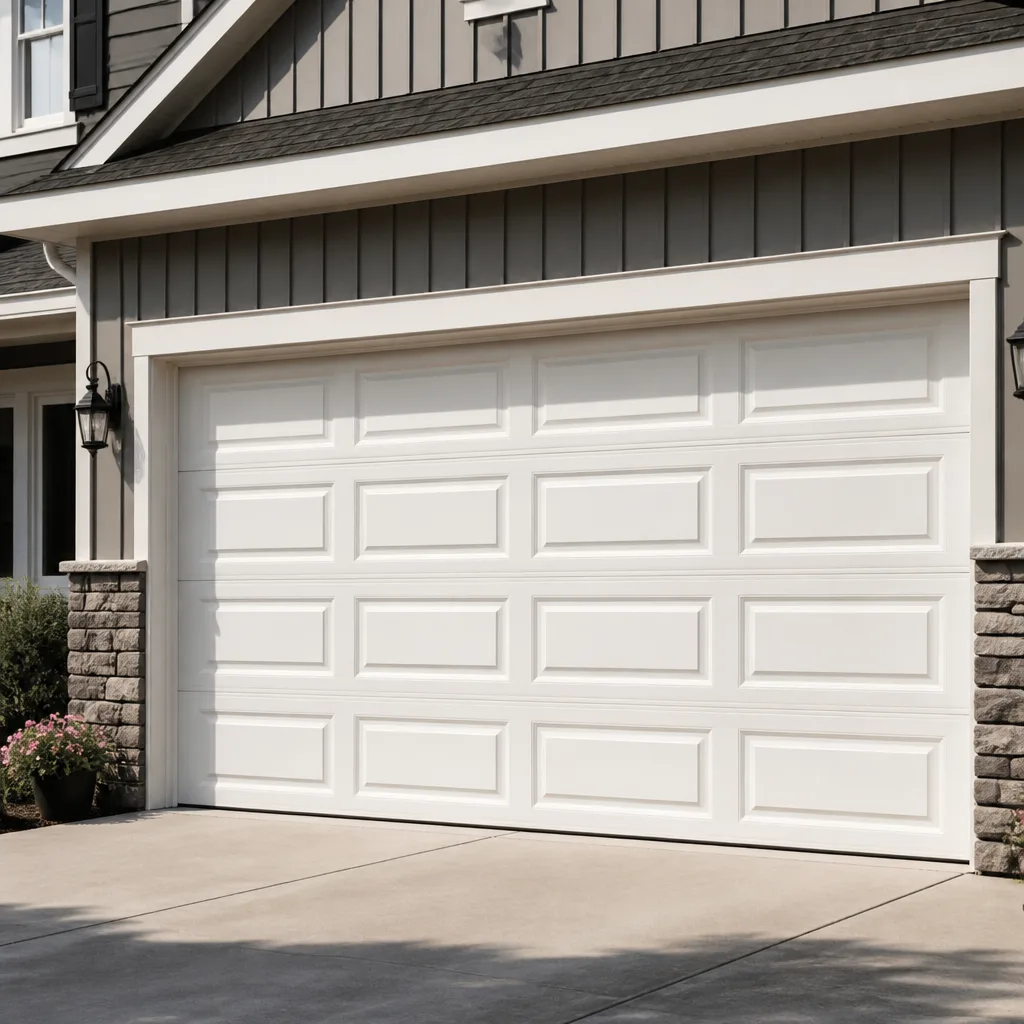 Raised-panel steel
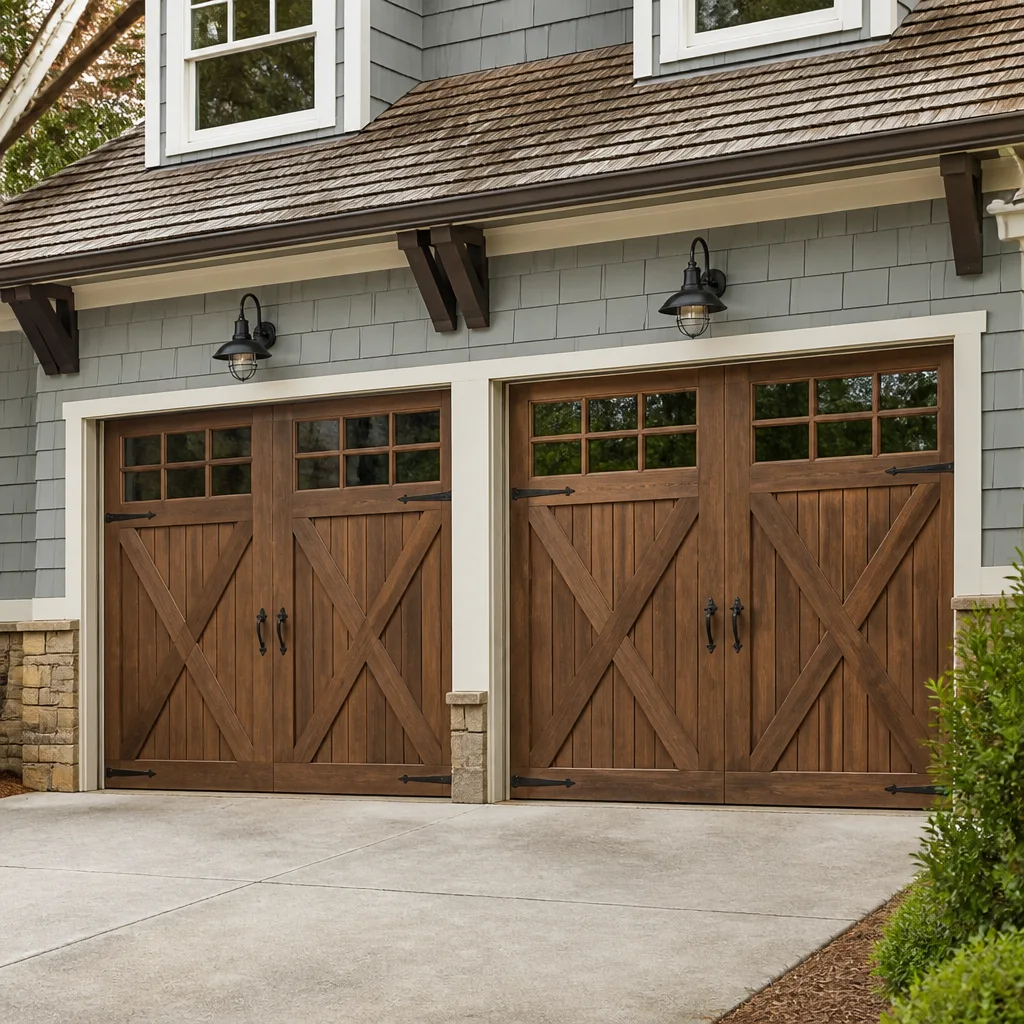 Carriage house
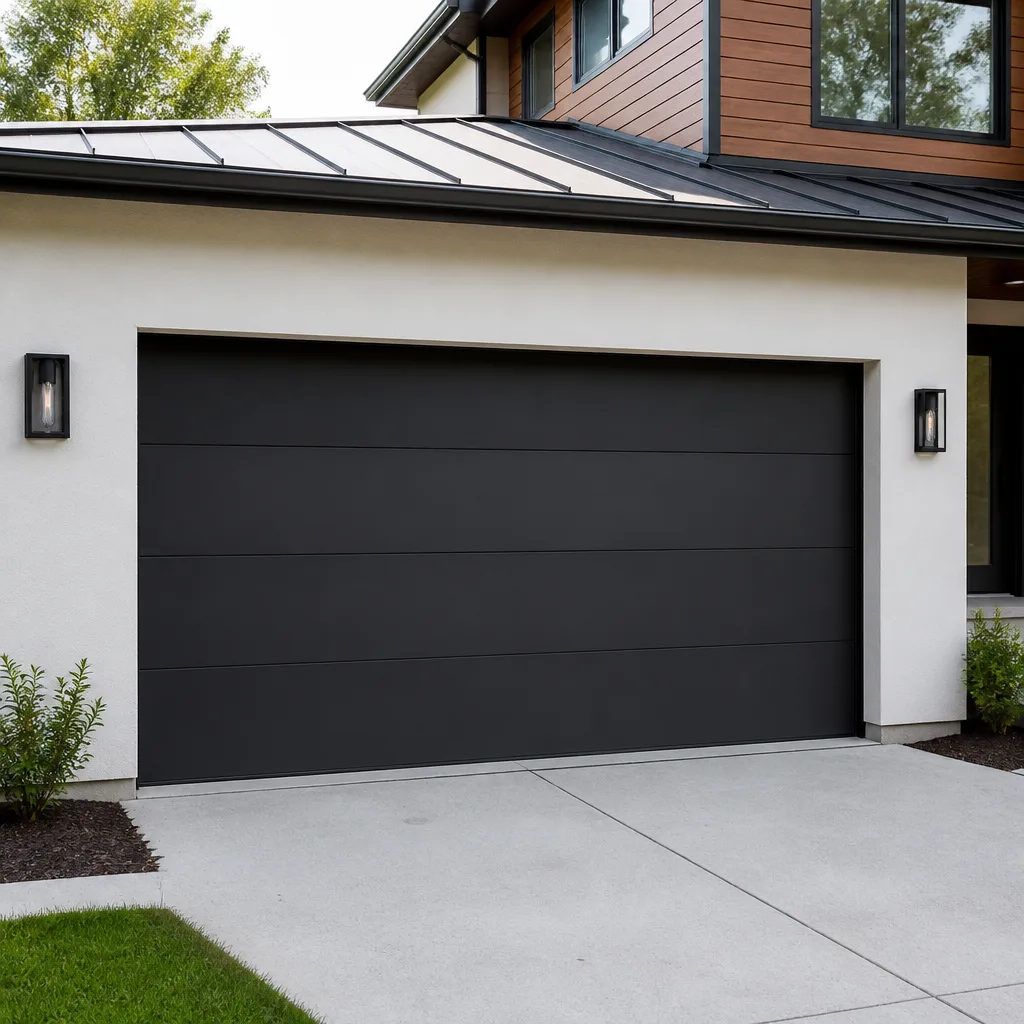 Modern flush
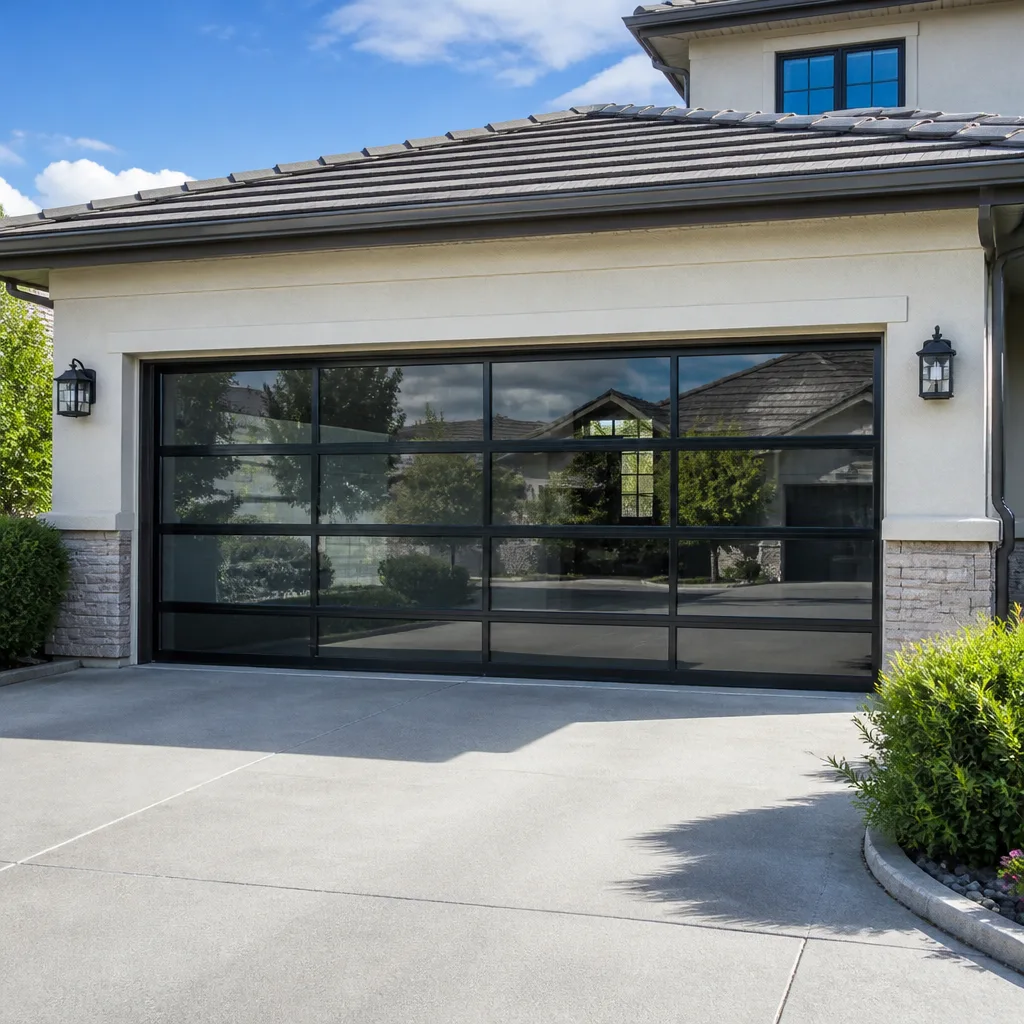 Full-view glass
 LiftMaster openers
 Chamberlain openers
Full 25-point door and opener safety check with every visit - springs, cables, rollers, tracks, and your LiftMaster or Chamberlain opener included
You get a price before we start. It does not change when the truck arrives.
Get your free estimateGarage Door Repair Maintenance Checklist for Las Vegas Homeowners
The number-one maintenance mistake Las Vegas homeowners make isn’t skipping lubrication. It’s using the wrong lubricant. WD-40, the go-to can in most garages, strips the factory grease from nylon rollers and acts as a solvent in triple-digit heat, so the very product people reach for to “help” their door is quietly accelerating its wear. This checklist is built around the specific failure modes that kill garage doors in the Mojave Desert, not the generic advice recycled on temperate-climate blogs. You’ll learn exactly which tasks you can safely do yourself, which ones require a licensed tech, what lubricant goes where, and how to spot the early signs of a spring about to let go. For more on spotting trouble early, see our Garage Door Warning Signs: A Las Vegas Homeowner’s Reference Guide.
Quick Answer
A proper garage door maintenance routine in Las Vegas means checking and cleaning the track monthly, applying silicone spray to rollers and hinges every 3 – 4 months in the desert heat, testing the door’s balance twice a year, and replacing UV-brittle weather seals every 2 – 3 years. Anything involving torsion springs, cables, or opener electrics should be left to a licensed tech. Used consistently, this routine adds 5 – 7 years to an average door’s lifespan in the Vegas climate.
Styles & brands we work with
Table of Contents
- Owner-Safe Tasks vs. Licensed-Tech Tasks
- Desert-Specific Failure Modes That Shorten Door Life in Las Vegas
- The Correct Lubricant for Every Component (and What WD-40 Is Doing to Your Door)
- The Door Balance Test: A 5-Minute Owner-Safe Diagnostic
- Monthly Maintenance Checklist
- Seasonal Maintenance for the Las Vegas Climate
- How to Log Maintenance and Why a Written Record Protects You
Owner-Safe Tasks vs. Licensed-Tech Tasks
Most garage door maintenance guides don’t tell you where the line is, and that’s a problem. Some tasks are perfectly safe for a homeowner with basic tools. Others can cause serious injury or death if done without proper training and equipment. Here’s the split, with the reason each task falls where it does.
Owner-Safe Tasks
- Visual inspection of cables, tracks, and hardware – You’re looking, not touching. Look for frayed cable strands, loose bolts, rust on the track, and wear marks on rollers.
- Clearing debris from the track with a dry cloth – Caliche dust and fine desert grit accumulate in the track channels. A dry microfiber cloth wipes it out safely. Never use grease or oil inside the track itself.
- Testing the door balance (see section below) – This is a diagnostic, not a repair. You’re only lifting the door by hand with the opener disengaged. It’s safe when done correctly.
- Applying silicone spray to rollers and hinges – Spraying lubricant on rolling parts requires no contact with anything under tension, as long as you stay away from the spring assembly.
- Checking weather seals for cracks and brittleness – Running a finger along the bottom seal and side weatherstripping to feel for hard, cracked rubber is completely safe.
- Tightening loose bolts on the track brackets – A socket wrench on the track brackets (not the spring) is within homeowner capability. If the track itself is misaligned, that’s tech territory.
Licensed-Tech Tasks
- Torsion spring adjustment or replacement – The torsion spring is the large coil mounted above the door that does most of the lifting. It’s wound under hundreds of pounds of torque. If it lets go while you’re adjusting it, the steel winding bar can kill you. Never touch it.
- Extension spring work on older doors – Extension springs (the ones that stretch along the horizontal track sides) also store dangerous energy. Safety cables must be in place, and proper tensioning requires training.
- Cable replacement or re-routing – The steel cables that run alongside the door and through the pulleys carry the same tension as the springs. A snapped cable is a whiplash hazard.
- Opener limit switch and force adjustment – The limit switch controls where the door stops opening and closing. Incorrect adjustment causes the door to slam into the ground or stop short. It also affects the auto-reverse safety function.
- Track realignment – A visibly bent or shifted track means the door is pulling unevenly, which puts stress on every other component. Straightening it properly requires releasing tension safely first.
- Panel replacement – Panels are heavy (a double garage door panel can weigh 50 – 90 pounds), and removing one changes the door’s entire weight balance. The spring tension must be re-matched to the new weight.
Here’s the rule we tell every Las Vegas homeowner: if it’s under tension, behind a faceplate, or wired to the opener, it’s not a homeowner task. The owner-safe list above covers real, valuable maintenance. You don’t need to do the dangerous stuff to protect your door.
Desert-Specific Failure Modes That Shorten Door Life in Las Vegas
Las Vegas is not like Phoenix, and it’s certainly not like any coastal city. Our climate creates failure patterns you won’t find in a generic maintenance guide. After two decades working on garage doors in this valley, here’s what we see most often.
Caliche Dust in the Track
Caliche dust – that fine, chalky, alkaline powder that coats everything in Las Vegas – doesn’t just look bad. It’s abrasive. When it builds up inside the vertical and horizontal track channels, it acts like sandpaper against the rollers every time the door opens and closes. Rollers that would last 10 – 15 years in a humid climate wear out in 5 – 7 years here if the track isn’t wiped down. The fix is simple: dry-wipe the inside of both tracks monthly. Do not use soap and water, and never spray lubricant inside the track. The track should be dry. Lubricant goes on the roller bearings, not the surface the roller rides on.
UV-Degraded Weather Seals
The rubber weather seal along the bottom of the door and the vinyl weatherstripping along the sides take direct Las Vegas sun for 6 – 8 hours a day in summer. UV radiation breaks down the polymers in rubber and vinyl, making them hard, cracked, and eventually crumbly. A dead weather seal lets in dust, heat, scorpions, and monsoon rain. In our experience, seals in Las Vegas need replacement every 2 – 3 years, compared to 5 – 7 years in milder climates. When you run a finger along the bottom seal and it feels rigid instead of pliable, it’s time.
Thermal Expansion Gaps Between Panels
Desert temperature swings are brutal on multi-panel doors. A summer day might go from 75°F at dawn to 112°F at 4 p.m., then drop to 85°F by midnight. Steel and aluminum expand and contract with every shift. Over time, the fasteners holding the panel hinges can loosen by a few millimeters. You’ll see daylight peeking through gaps between panels, hear a rattling noise when the door moves, or notice the panels looking slightly uneven. This is a thermal expansion issue, common in Las Vegas and rare elsewhere. Tightening the hinge bolts is owner-safe. If the gaps persist after tightening, the door may need re-leveling, which is tech work.
Spring Fatigue from Extreme Heat Cycles
Torsion springs are rated for a certain number of cycles (typically 10,000 for standard springs, 15,000 – 20,000 for upgraded high-cycle springs). Heat doesn’t change the cycle count, but Las Vegas heat accelerates the chemical breakdown of the spring’s internal lubricant and can cause micro-expansion stress at the coil ends. What this means practically: a 10,000-cycle spring in Vegas often fails before its rated cycle count. If your door is used 4 times a day, that’s only 7 years. If you don’t know when the springs were last replaced and the door is more than 7 years old, have a tech inspect them. Spring failure is the most common emergency repair call we get in Las Vegas, and it’s entirely predictable with proper inspection.
For a deeper look at what a full garage door repair in Las Vegas typically involves and costs, see our Garage Door Repair in Las Vegas page.
The Correct Lubricant for Every Component (and What WD-40 Is Doing to Your Door)
If you remember one thing from this entire guide, make it this: WD-40 is not a lubricant for garage doors. WD-40 is a water-displacement solvent. It’s designed to loosen rusted bolts and clean grease off metal. When you spray it on nylon rollers or hinges, it dissolves the lubricant that’s already there, leaving the parts drier than they started. In Las Vegas heat, that’s a recipe for squeaking, grinding, and premature roller failure. Here’s what to use instead.
Component-by-Component Lubricant Guide
- Rollers (nylon or steel) – Use silicone spray or white lithium grease applied to the roller bearings, not the wheel surface. Nylon rollers with sealed bearings (the kind on most modern Wayne Dalton and Clopay doors) need less frequent lubrication, but an occasional silicone spray on the bearing helps.
- Hinges – Silicone spray. The hinge pivots are metal-on-metal, and silicone penetrates the pivot point without attracting dust. In the Vegas heat, lightweight silicone also resists evaporation better than thin oils.
- Torsion spring shaft – White lithium grease, applied sparingly along the exposed coil surface. The spring needs a lubricant that stays put and resists high temperatures. Lithium grease does that. Do not touch the spring while applying; use a spray can with a straw nozzle and a light hand.
- Track – Nothing. The track stays dry. Lubricant in the track traps caliche dust and creates a grinding paste. If you see grease in your track, someone did it wrong, and you should wipe it out.
- Opener chain or belt – If you can feel or hear the chain on your opener, a light coat of white lithium grease on the chain only (never on a belt drive) is acceptable. Belt-drive openers need no lubrication.
- Lock mechanism and keyhole – Graphite powder or a dry Teflon spray. Oil in a keyhole collects dust and jams the mechanism.
Lubrication Frequency in Las Vegas
Vegas heat evaporates lighter lubricants quickly. For homeowners here, plan on lubricating rollers and hinges every 3 – 4 months, not the 6 – 12 months you see in generic guides. The torsion spring shaft can go every 4 – 6 months. If your door sits in direct western sun all afternoon, lean toward the shorter interval. A door that squeaks or groans more than faintly is telling you it’s already overdue.
The Door Balance Test: A 5-Minute Owner-Safe Diagnostic
A properly balanced garage door weighs almost nothing to lift by hand. The springs are supposed to offset the door’s entire weight, so when you disconnect the opener, you should be able to lift the door smoothly with minimal effort and have it stay put around waist height. If the door is out of balance, the opener motor is doing work it wasn’t designed for and the springs are wearing unevenly. Here’s how to run the test safely.
Step-by-Step Balance Test
- Close the door completely.
- Pull the red emergency release cord hanging from the opener rail. This disconnects the door from the opener carriage. The door should now move freely by hand.
- Lift the door by the handle or bottom edge until it reaches about waist height (roughly 3 – 4 feet off the ground). Use both hands and a lift from the legs, not the back.
- Let go slowly. A properly balanced door will stay put or drift very slightly. If the door wants to fall closed, the springs are tired or improperly tensioned. If the door wants to fly upward, the springs are over-tensioned.
- Lower the door gently to the floor. Reconnect the opener by pulling the red release cord back toward the opener motor, or by pressing the opener button until the carriage re-engages.
What the results tell you: a door that drops from waist height within a second or two has springs that are losing tension. That means the opener is straining to lift the door every single cycle. Left unchecked, the opener’s circuit board or motor burns out, and the springs fail completely, usually at the worst possible moment. If the door is hard to lift or falls quickly, call a professional. Torsion spring adjustment is never a DIY fix. This test takes 5 minutes and should be done twice a year, in spring and fall.
Monthly Maintenance Checklist
Ten minutes a month. That’s all this takes. If you do nothing else, do these five things, and you’ll catch most problems before they become emergency repair calls.
- Visual scan of cables – Look at the cables running along both sides of the door. Frayed strands, rust spots, or any kink means it’s time to call a tech. A snapped cable under load is dangerous.
- Dry-wipe the track – Microfiber cloth, dry, inside both vertical and horizontal tracks. Remove caliche dust and any small debris. Never use liquid cleaners in the track.
- Check weather seals – Run a hand along the bottom seal and side weatherstripping. Look for cracks, brittleness, or light passing through. If you can see light from inside the garage with the door closed, the seal is shot.
- Listen to the door – Press the opener and pay attention. A properly maintained door is quiet. Grinding, rattling, popping, or a loose tinny sound means something is out of place. Don’t ignore it; sounds don’t fix themselves.
- Test the auto-reverse safety function – While the door is closing, wave a flat object (like a rolled-up newspaper) across the photoelectric sensor beam at the base of the door. The door should reverse immediately. If it doesn’t, the safety system is compromised, and the door needs service. This is a child-safety issue, not a convenience issue.
These monthly checks take about ten minutes and will catch most developing problems before they become emergency repairs. If anything looks or sounds off, the Doyle Garage Doors Las Vegas home page has our full contact information, or you can call (725) 224-5155 and a real person answers, day or night.
Seasonal Maintenance for the Las Vegas Climate
Las Vegas doesn’t have seasons the way most of the country does. We have pre-summer, summer, post-summer, and a brief window of mildness everyone else calls winter. Here’s what each period demands from your garage door.
Pre-Summer (March – May)
This is the most important window for preventive maintenance. The extreme heat hasn’t hit yet, but it’s coming. Do the full balance test, lubricate all components with the correct products, check the bottom seal for winter (such as it was) damage, and inspect the operator arm and opener rail for any looseness. If your door is more than 7 years old, this is the time to have a tech inspect the springs. A spring replaced in March costs you a scheduled service call. A spring that breaks in August costs you an emergency call and possibly a missed day of work.
Peak Summer (June – September)
This is when we see the most emergency calls in Las Vegas. Heat-weakened springs, dried-out rollers, warped panels from thermal stress, and opener motors tripping thermal overload from the 120°F garage air. During these months, don’t skip the monthly checks. Pay special attention to the door’s sound profile: summer is when small problems compound fastest. If your garage door is your primary home entry point (common in many Las Vegas neighborhoods), keep a working manual release in case the opener fails. If the door becomes hard to operate, don’t force it. Forcing a struggling door can turn a $200 repair into a $1,000+ opener replacement or a collapsed section.
Post-Monsoon (August – October)
Monsoon season brings brief but intense humidity spikes and the occasional wind-driven rain. After a monsoon event, check the bottom seal for water staining or debris pushed under the door. Check the track for grit washed in. And check the door’s bottom corners for rust spots, especially on steel doors with painted finishes that may have micro-scratches from flying debris.
Winter (November – February)
Las Vegas winters are mild, but the temperature swings between overnight lows and midday highs still stress metal components. Lube every 4 months year-round in Vegas, but in winter you can stretch it to 5 without much risk. This is also a good time to clean the exterior of the door with a soft brush and mild car-wash soap to remove dust and baked-on residue. Don’t pressure-wash a garage door; the high-pressure water can force its way past the weather seals and into the panel joints.
How to Log Maintenance and Why a Written Record Protects You
Most homeowners don’t keep a maintenance log for their garage door, and that’s a missed opportunity. A simple written record does three concrete things.
First, it protects your repair guarantee. If a repair fails within its warranty period and you can show that you maintained the door per schedule, there’s no argument. Guarantee honored. Second, it helps with insurance claims. If your home suffers a break-in through the garage or monsoon water damage from a failed seal, a maintenance log demonstrates you weren’t negligent, which strengthens your claim. Third, it makes repairs faster. When a tech asks when the springs were last replaced and you can say “October 2023, by this company,” the diagnosis takes half the time.
What to Log
- Date – Every entry, even the monthly visual checks.
- Task performed – “Lubricated rollers and hinges with silicone spray” is enough detail.
- Observations – “Slight grinding noise from left roller” or “Bottom seal showing cracks.”
- Repairs performed – Who did them, what was replaced, the date, and the cost.
- Parts warranty expiration – Most springs and openers have manufacturer warranties. Write down when the warranty period ends.
Keep it simple. A notebook in a kitchen drawer works fine. A Google Doc works too. The habit matters more than the format. If you’re the kind of person who keeps car maintenance records, do the same for your garage door. The day you need the record is never the day you want to start reconstructing it from memory.
Common Mistakes to Avoid
- Using WD-40 on rollers and hinges. It’s a solvent, not a lubricant, and it strips the existing grease. In Las Vegas heat, a WD-40-sprayed roller fails faster than an unsprayed one. Switch to silicone spray for rollers and hinges, white lithium grease for the torsion spring.
- Greasing the track. The track should be dry. Lubricant attracts caliche dust and creates an abrasive slurry that grinds down the rollers and accelerates track wear. Dry-wipe only.
- Ignoring the weather seal until it’s visibly gone. By the time the rubber crumbles off entirely, months of dust, heat, pests, and water have been getting in. Replace seals every 2 – 3 years in the Las Vegas climate on schedule, not on appearance.
- Trying to adjust the torsion spring themselves. We can’t say this enough: the torsion spring is under enough tension to cause fatal injury. No YouTube video, no matter how confident the presenter, makes this a good idea. This is the most common serious mistake we see.
- Skipping the balance test entirely. The balance test is free, takes 5 minutes, and tells you more about your door’s health than any other single check. Homeowners skip it because they don’t know it exists. Now you do.
- Running a struggling door instead of calling a tech. When the door labors, whines, or moves unevenly, something is wrong. Continuing to use it adds stress to every component, turning small problems into large invoices. Call before it gets worse.
- Forgetting the auto-reverse safety check. The photoelectric sensors and auto-reverse function are there to protect children and pets. Test it monthly. If it fails, stop using the door and get it serviced immediately.
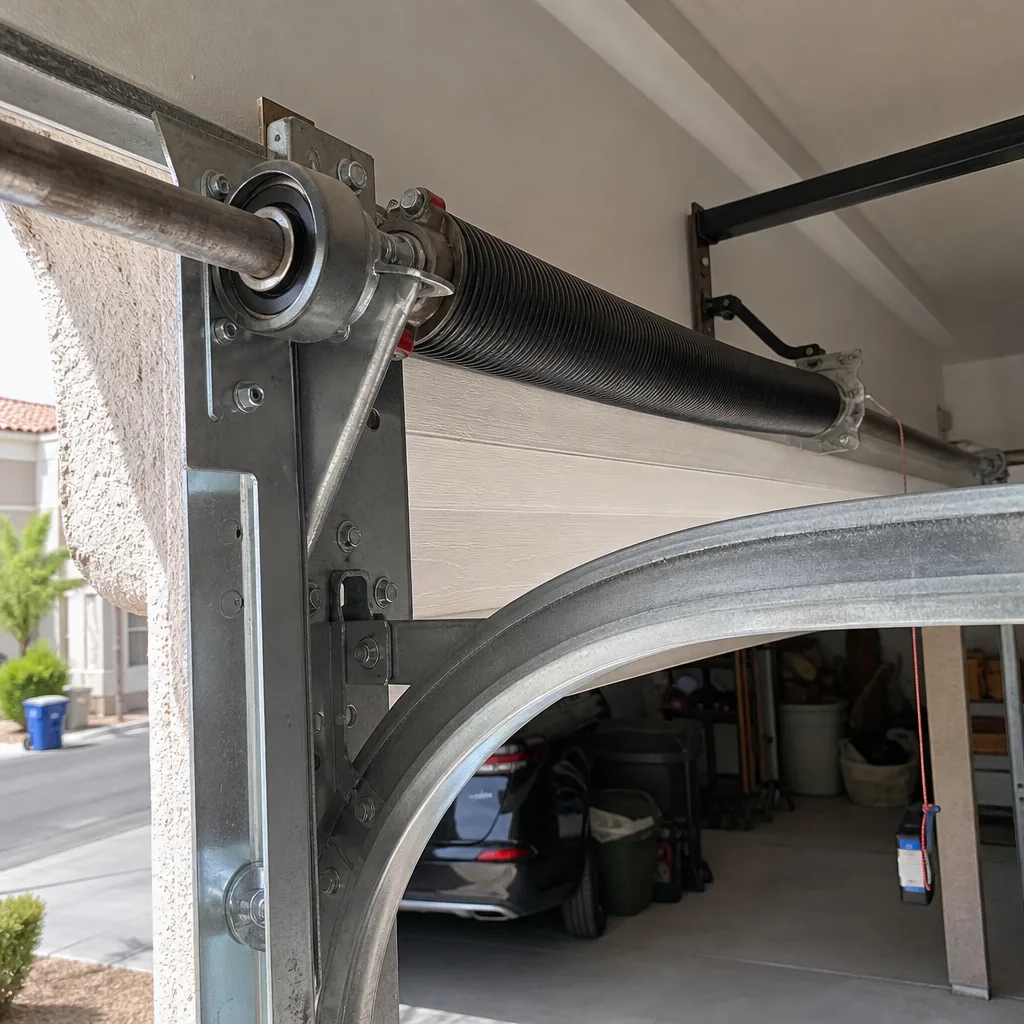
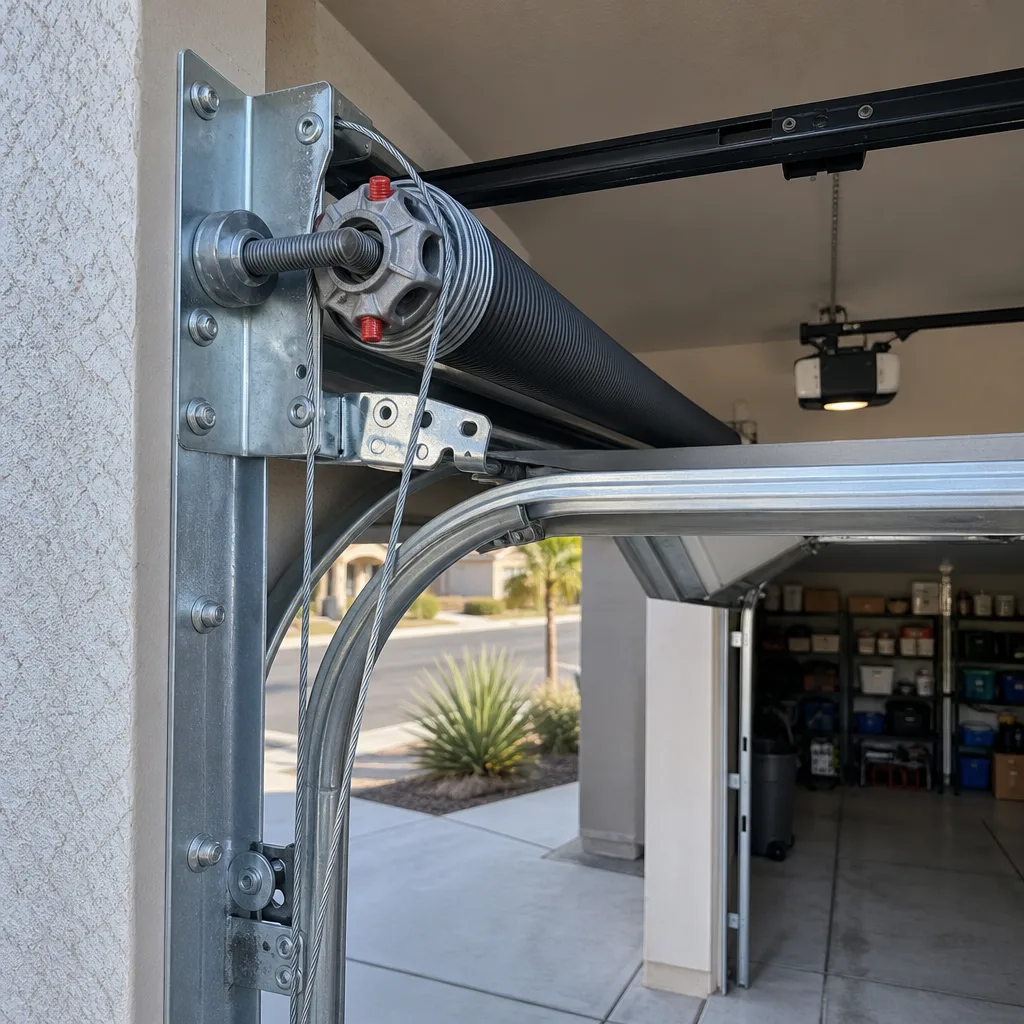
See the difference
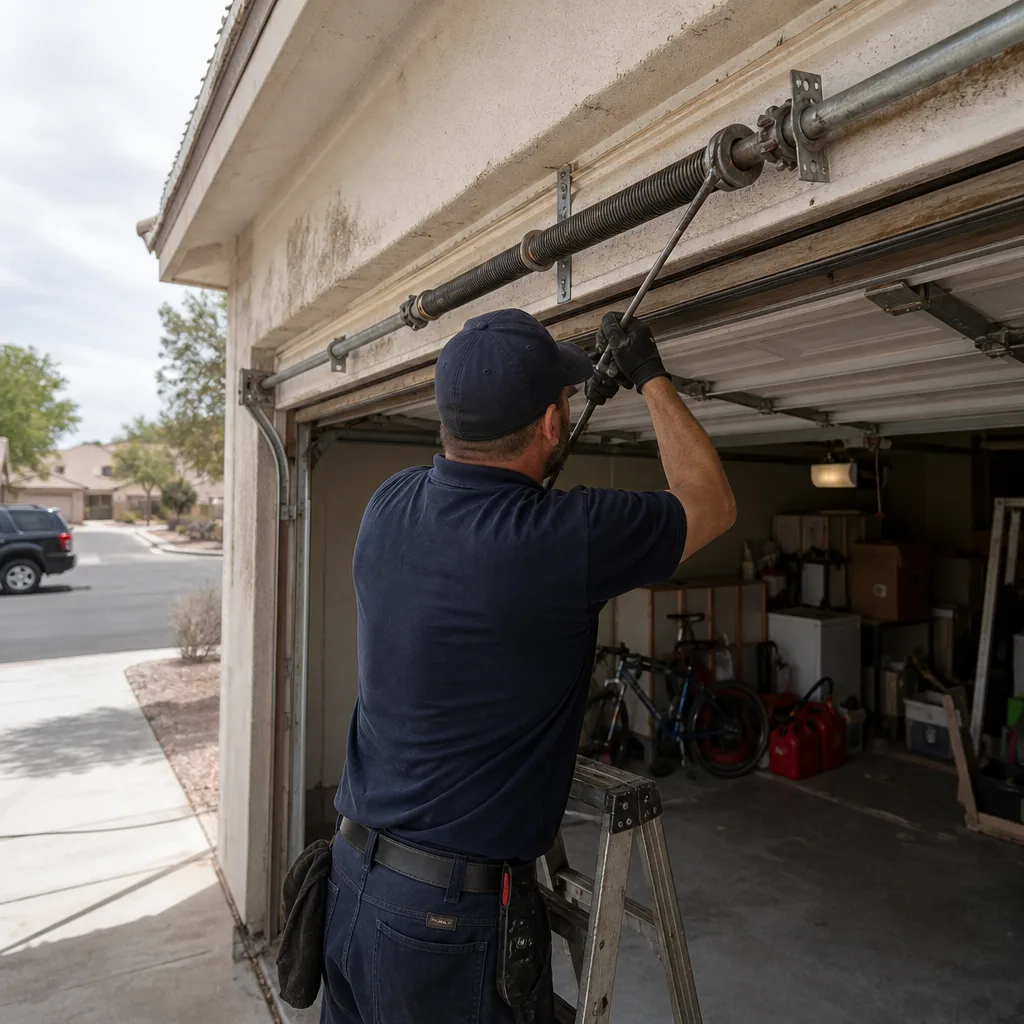 Before
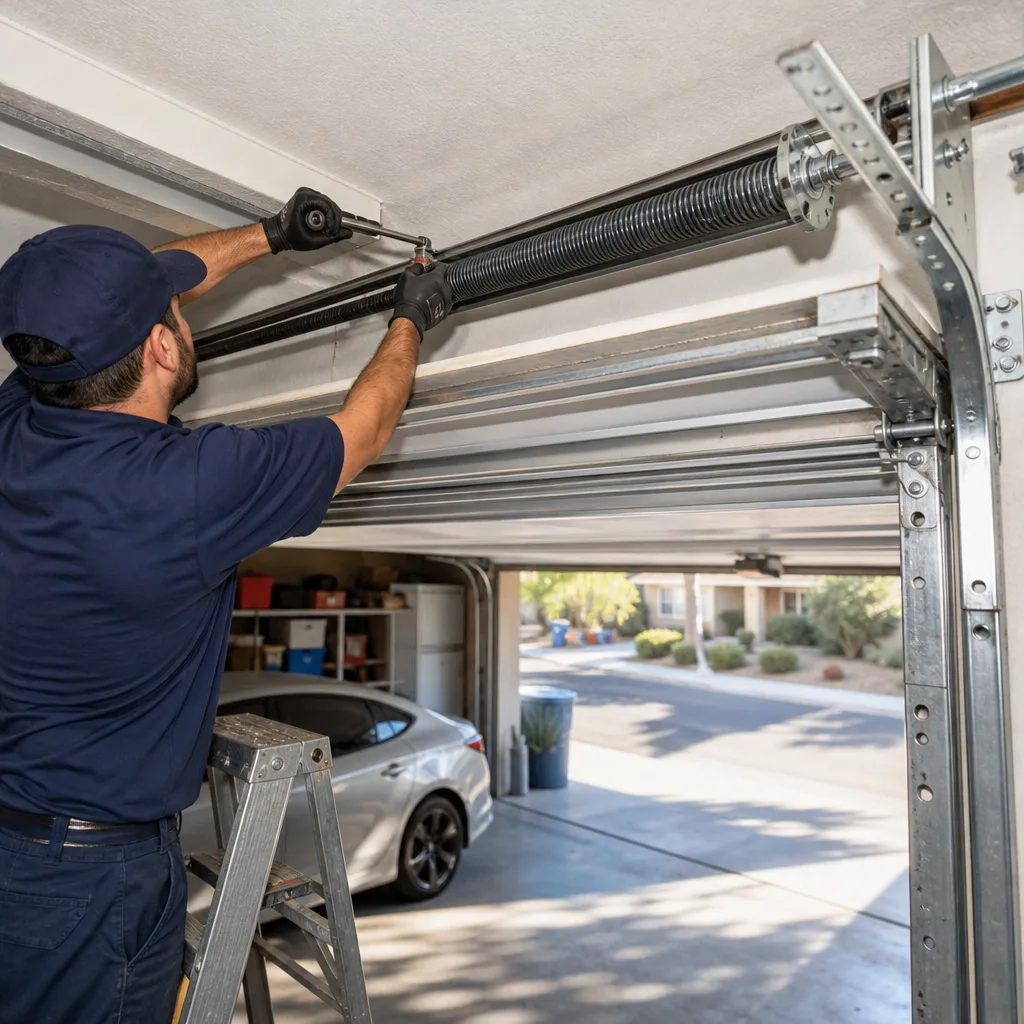 After
After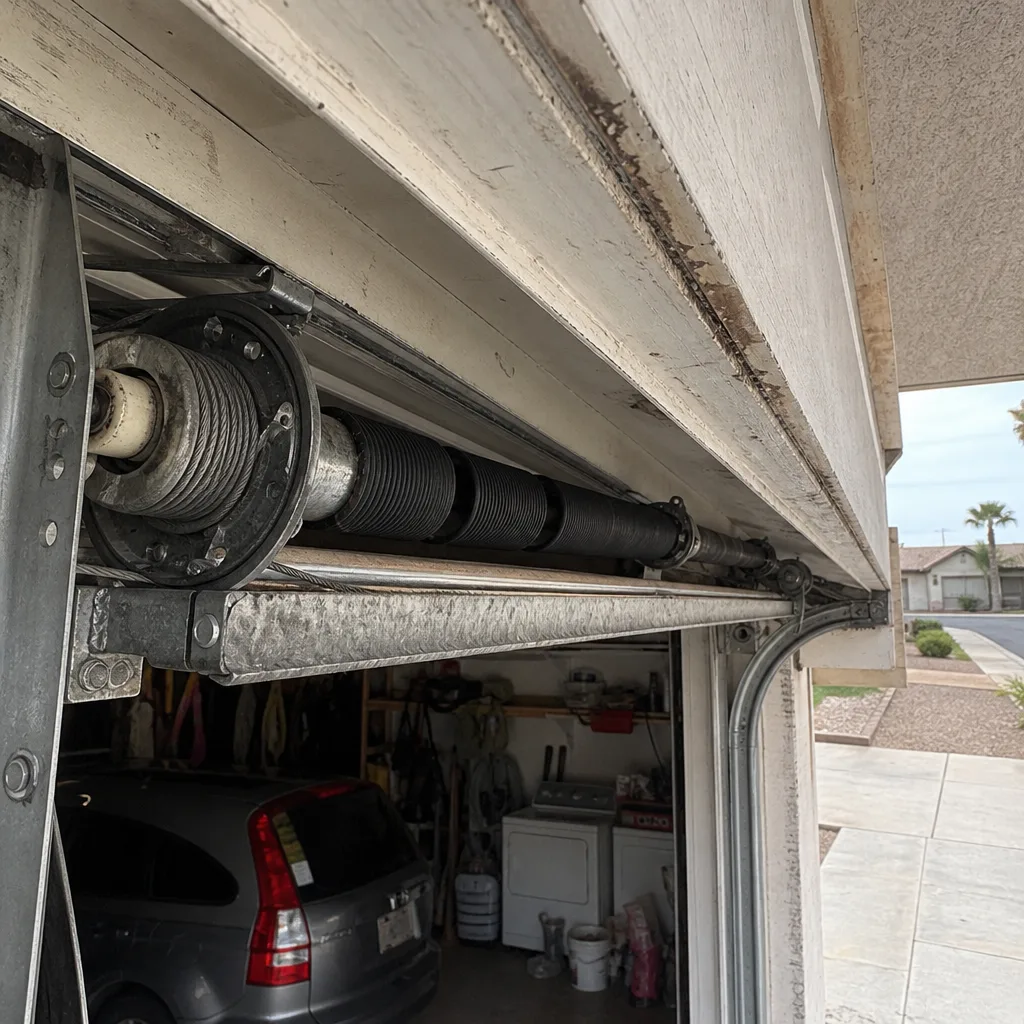 Before
 After
After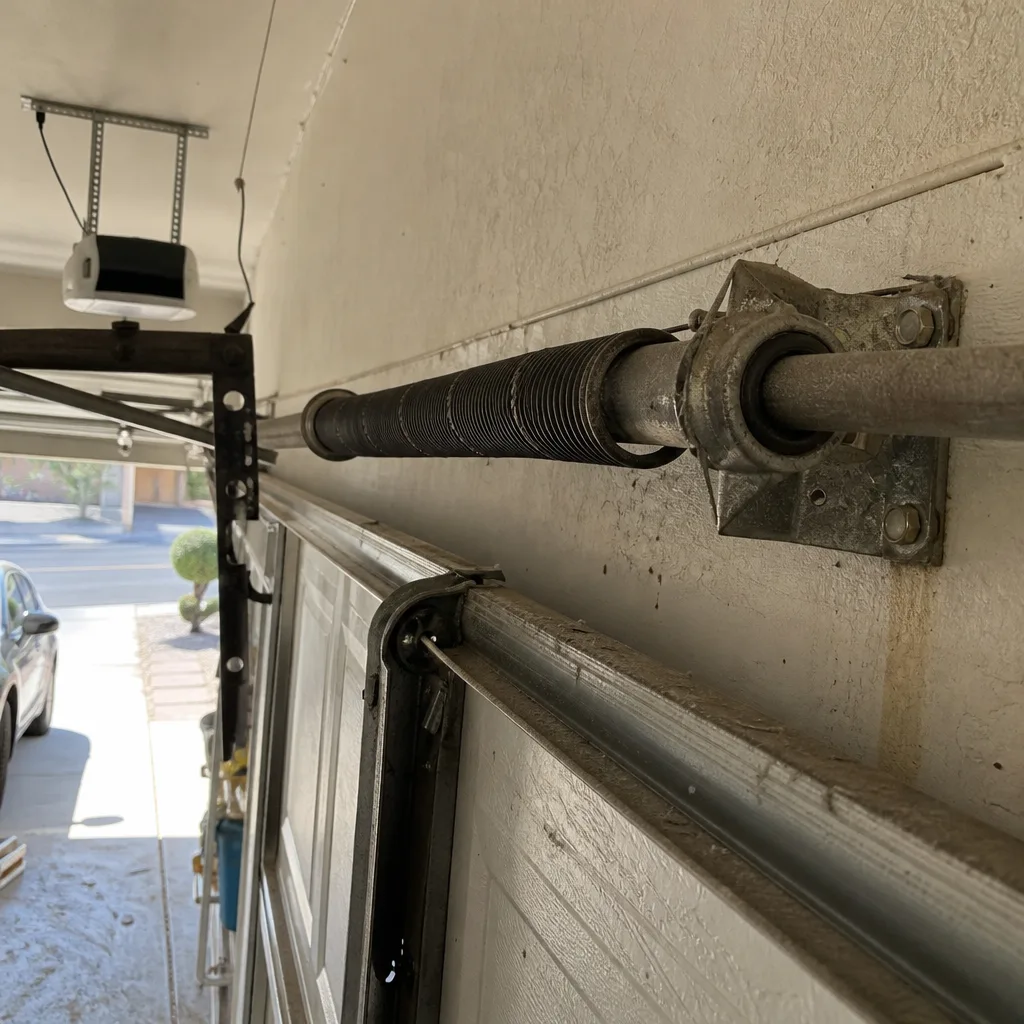 Before
 After
AfterWhen to Call a Professional
Call a tech if the torsion spring breaks (you’ll hear a loud bang like a firecracker or two-by-four snapping) and the door refuses to lift; if any cable is frayed, rusted, or separated from its drum; if the door drops quickly when the opener is disengaged; if the auto-reverse safety function fails; if the track is visibly bent or misaligned; or if the opener makes a humming sound without moving the door. These are not tune-up items; they’re safety and security issues that need trained hands. Doyle Garage Doors Las Vegas offers free estimates throughout Las Vegas, and every repair comes with a written price before any work starts and a written 365-day guarantee. Call (725) 224-5155 and a real person picks up, day, night, weekend, or holiday.
Frequently Asked Questions
Every 3 – 4 months, not the 6 – 12 months typically recommended in cooler climates. The Vegas heat evaporates light lubricants quickly. Use silicone spray on rollers and hinges, white lithium grease on the torsion spring shaft, and nothing in the track. If the door squeaks audibly, it’s overdue. Call (725) 224-5155 if you’re not sure what to use, and we can walk you through a quick lubricant check over the phone.
A standard 10,000-cycle torsion spring lasts roughly 7 – 8 years in Las Vegas with typical daily use, though the heat and intensity of our climate can shorten that. High-cycle springs rated for 15,000 – 20,000 cycles last noticeably longer. If your springs are more than 7 years old, schedule an inspection now before they fail without warning. Spring replacement is always a professional job.
You can and should do the owner-safe tasks: visual inspections, track dusting, lubrication with the correct products, the balance test, and weather seal checks. Anything involving torsion springs, extension springs, cables, opener electrical components, or track realignment should be done by a licensed professional. The dividing line is simple: if it’s under tension, behind a faceplate, or wired to the opener, call a tech.
Grinding in the Vegas summer typically means the lubricant on your rollers or hinges has failed or been stripped away, exposing metal-on-metal contact and possibly accumulated caliche dust. Left alone, the rollers wear down and the track grooves deepen, leading to jerky operation and eventual failure. Wipe the track dry and re-lubricate with silicone spray. If the noise persists, call (725) 224-5155.
Disconnect the opener with the red release cord, lift the door to waist height, and let go. If it stays put or drifts very slightly, it’s balanced. If it falls quickly or shoots upward, the springs are mis-tensioned and the opener is being overworked. Do this test twice a year. A failing balance is a precursor to spring failure and opener burnout.
Yes. We service and install all major brands, including LiftMaster, Chamberlain, Genie, Clopay, Amarr, Wayne Dalton, Craftsman, and Raynor. Whether you need a Garage Door Installation in Las Vegas or a Garage Door Opener Repair in Las Vegas, we’re factory-trained on the equipment. Every visit includes a written price before work starts and a written 365-day guarantee.
The Bottom Line
Garage door maintenance in Las Vegas isn’t optional; it’s the difference between a door that lasts 15 years and one that eats money in emergency repairs every few years. The desert adds three unique threats: caliche dust abrasive enough to grind down rollers, UV damage that bakes weather seals brittle, and thermal swings that loosen fasteners and stress springs. Counter each one deliberately: dry-wipe the track monthly, check seals every 3 months, replace them every 2 – 3 years, lubricate with the right product for each component, and run the balance test twice a year. Stay out of the tension system entirely. If it involves springs or cables, call a tech. If it needs a tech, call us. A real person answers.
Written by Aaron Teague, Owner at Doyle Garage Doors Las Vegas, serving Las Vegas since 2001. Explore more guides & resources on our blog.