
Last updated October 16, 2026
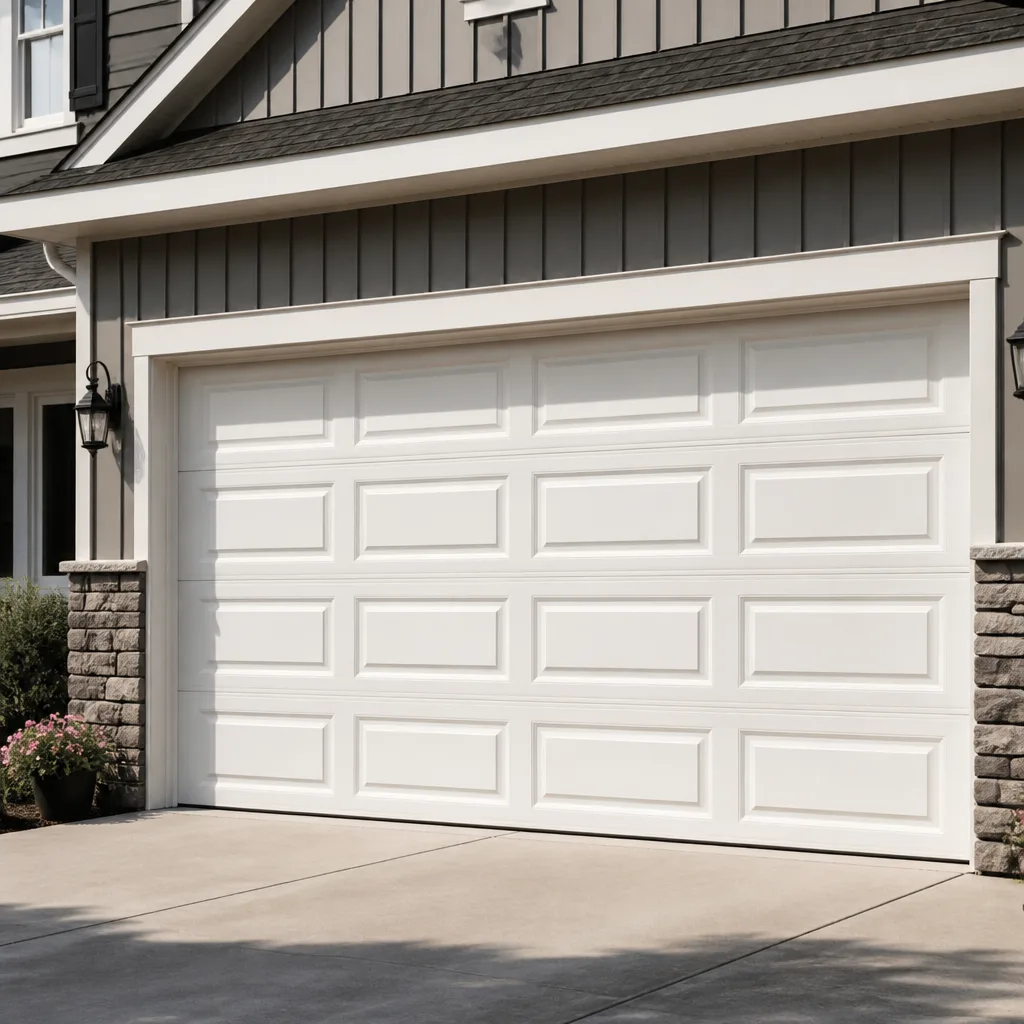 Raised-panel steel
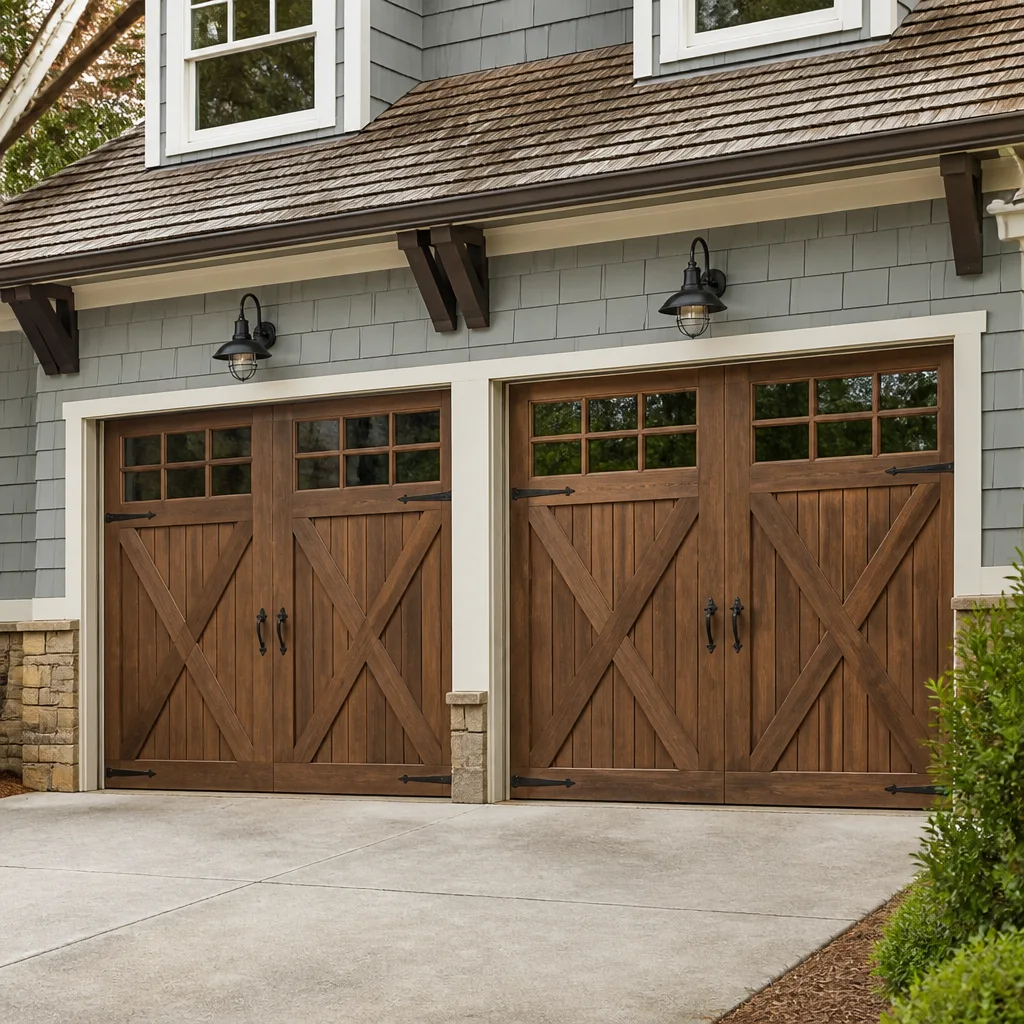 Carriage house
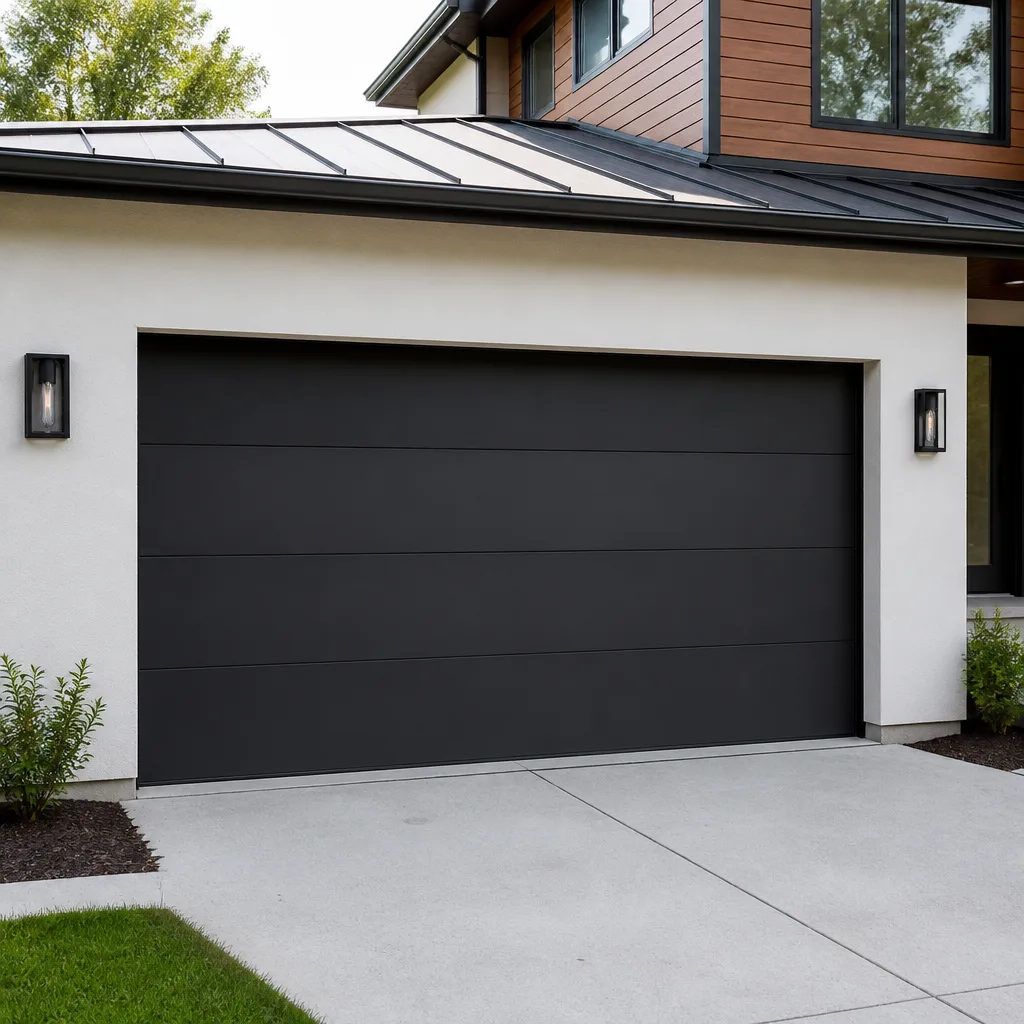 Modern flush
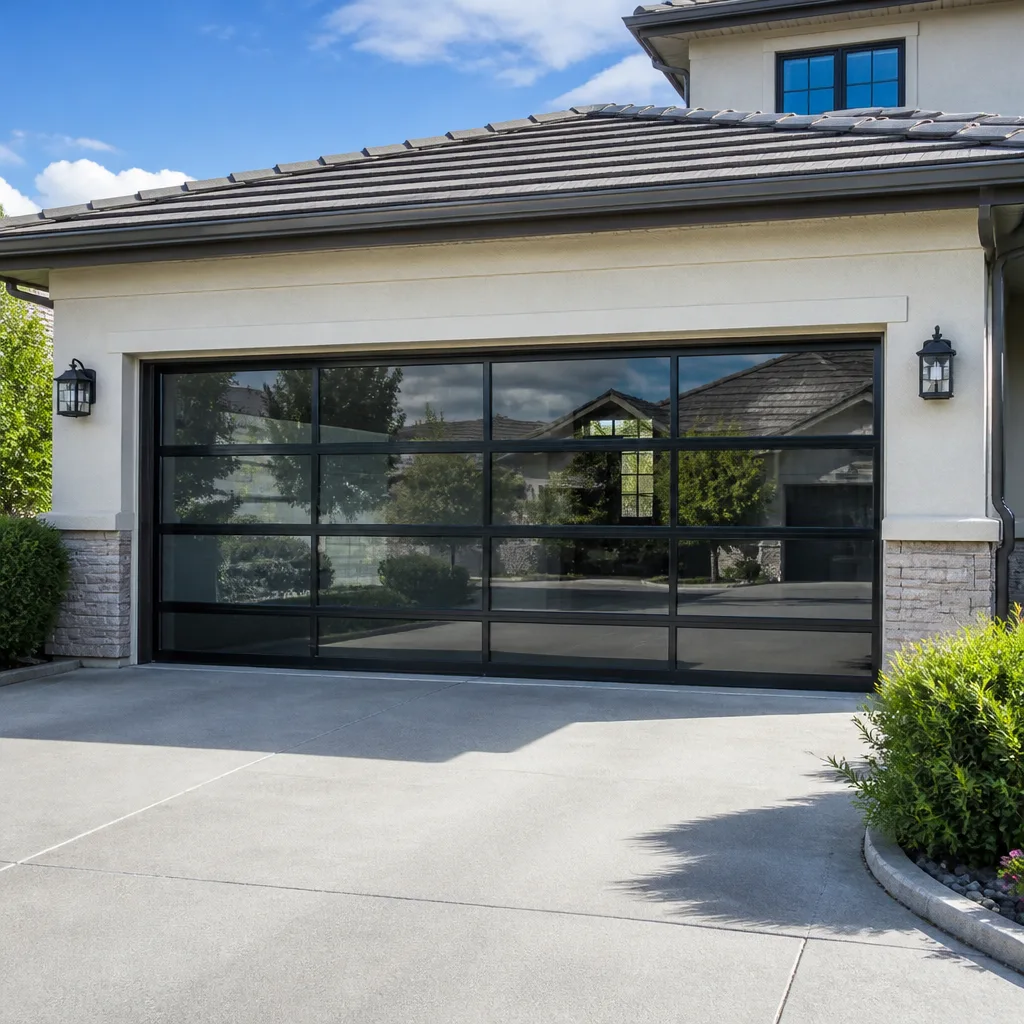 Full-view glass
 LiftMaster openers
 Chamberlain openers
Full 25-point door and opener safety check with every visit - springs, cables, rollers, tracks, and your LiftMaster or Chamberlain opener included
You get a price before we start. It does not change when the truck arrives.
Get your free estimateSeasonal Garage Door Care for Las Vegas: Year-Round Homeowner’s Guide
Las Vegas logged 95 days above 100°F in 2023. That’s more than three straight months where ambient heat alone breaks down rubber seals, stresses torsion springs, and pushes opener circuit boards past their thermal limits. Most more guides & resources you’ll find online were written for places with four gentle seasons and a garage that gets used twice a day. A Las Vegas garage door lives a harder life than that, and the maintenance calendar in this guide is built around the Mojave’s actual weather patterns: one long heat siege, a short but sharp cold season, and two narrow windows in between where the smart homeowners do their real work.
Quick Answer
Seasonal garage door care in Las Vegas comes down to four jobs timed to the local climate: replace or treat weather seals and verify spring tension every April before the heat arrives, watch for opener thermal shutdowns from June through September, re-lubricate with cold-rated grease and check the bottom seal every October, and run a full door inspection after every wind event. Budget $85 to $140 for a professional tune-up once a year in Las Vegas, and expect to replace weather seals every 2 to 3 years because ultraviolet exposure here destroys rubber faster than almost anywhere else in the country.
Styles & brands we work with
Table of Contents
- April: The Pre-Heat Season Checklist (The Most Important Month)
- June Through September: Surviving the Heat Siege
- October: Pre-Winter Timing That Actually Makes Sense Here
- Wind Events: The Haboob Response Checklist
- The One Annual Professional Task That Covers Everything
- What You Can Safely Do Yourself (And What You Shouldn’t)
- What Seasonal Garage Door Care Costs in Las Vegas
- Common Mistakes to Avoid
- When to Call a Professional
- Frequently Asked Questions
April: The Pre-Heat Season Checklist (The Most Important Month)
In Las Vegas, April is not “spring maintenance season.” April is your last reasonable chance to do outdoor work before the furnace turns on. By mid-May, working inside an uninsulated garage after 10 a.m. means standing in 100-plus degree air, and by June you’ll be touching metal parts that have been baking for hours. The pre-heat checklist below is the single most valuable thing you can do for your garage door all year. We’ve been doing garage door repair in Las Vegas since 2001, and the doors that survive our summers are the ones whose owners did these five things in April.
The Five Pre-Heat Tasks
- Inspect and treat the weather seals. The vinyl or rubber strip along the bottom of the door and the flexible seals along the sides are your only defense against dust, wind, and radiant heat. UV light in Las Vegas degrades rubber roughly twice as fast as it does in coastal climates. Look for cracking, flattening, or gaps where the seal meets the concrete. If the bottom seal has lost its rebound and stays compressed flat, heat is coming in through that gap. A $20 to $40 replacement seal can cut garage interior temperatures by a noticeable margin.
- Check opener ventilation. Chamberlain, Genie, and LiftMaster openers all have thermal protection circuits that shut the unit down when internal temperatures get too high. The biggest preventable cause of that shutdown is poor airflow around the motor housing. Clear away any boxes, storage bins, or clutter within 18 inches of the opener. If your garage ceiling is finished, make sure the opener isn’t mounted in a dead-air pocket.
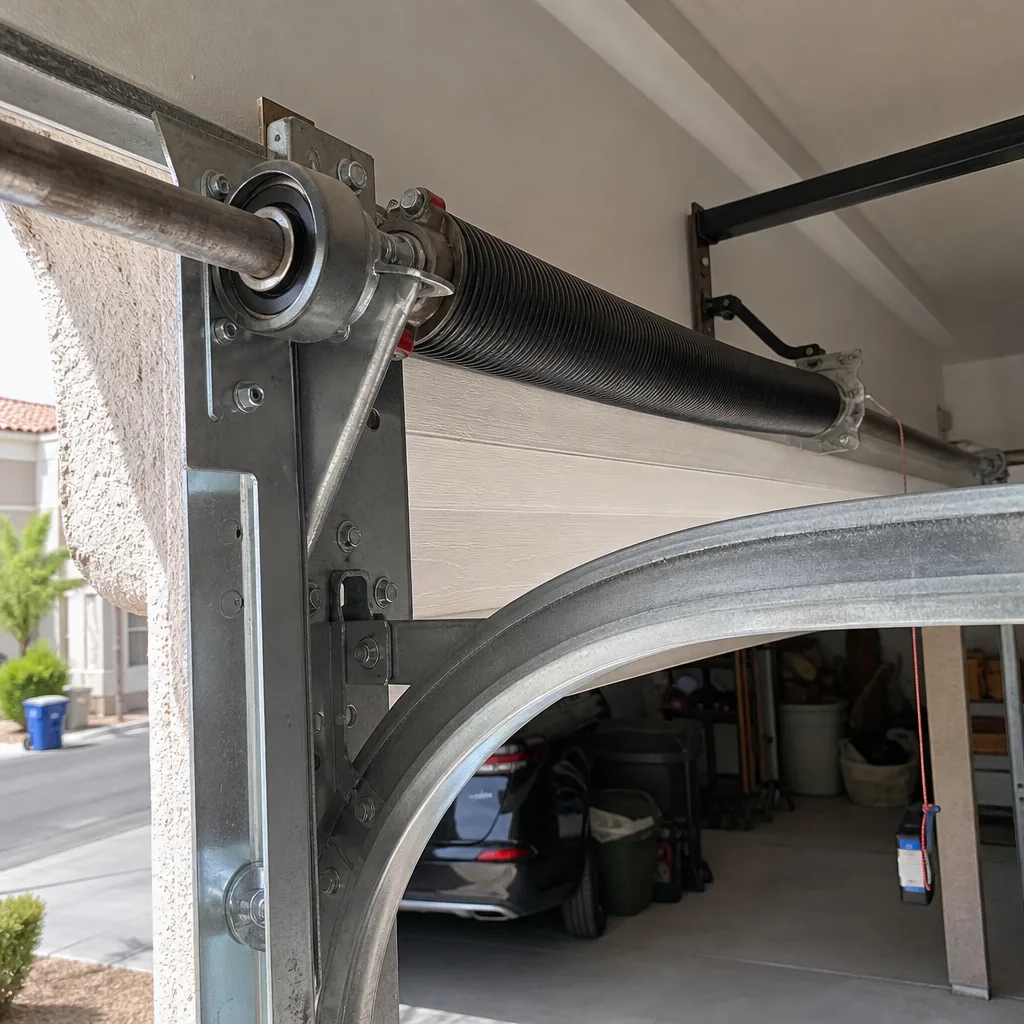
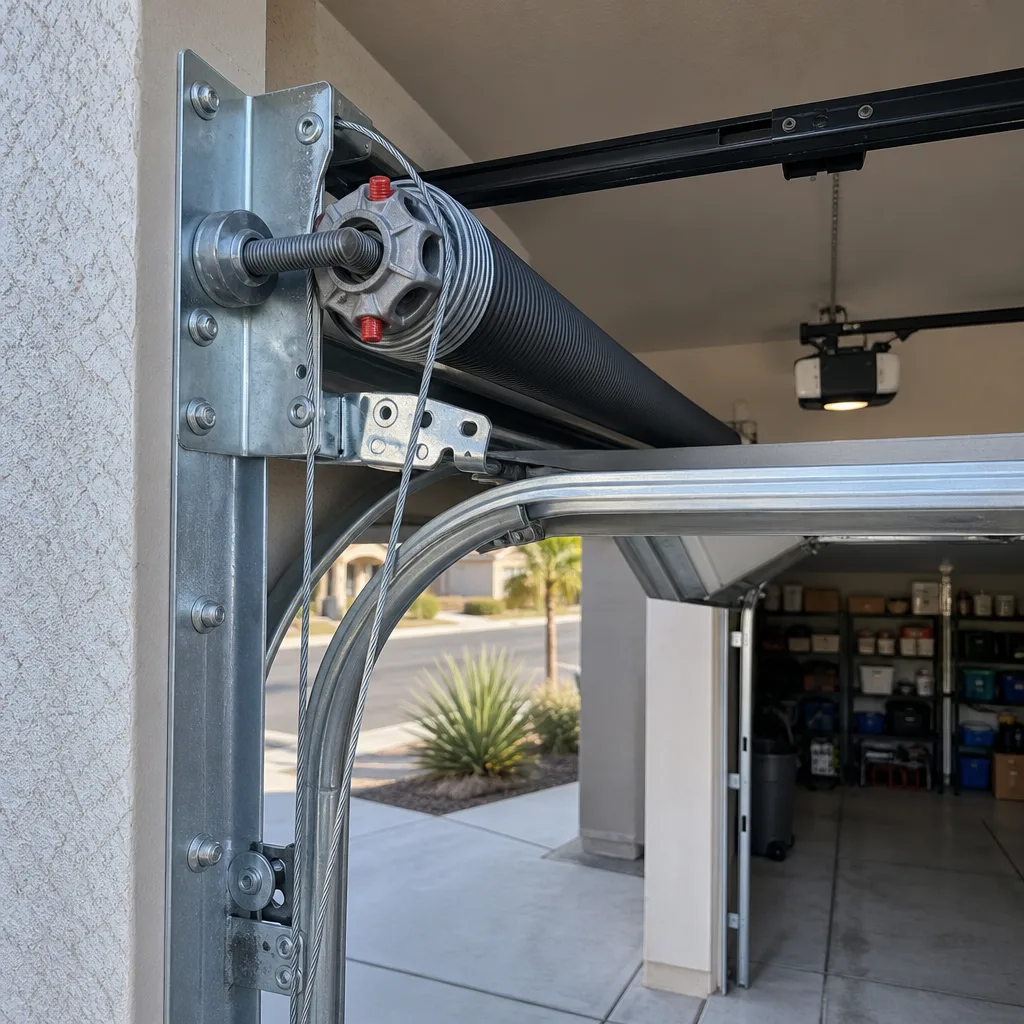
- Verify spring tension. The torsion spring, the large coil mounted above the door that does most of the lifting, loses tension gradually over time. A door that used to open smoothly and now feels heavy, or sags on one side, is telling you the spring is wearing out. High summer use means hundreds of cycles over the next few months. If the spring is marginal in April, it will fail in July. This is not a job to attempt yourself: a torsion spring under load carries enough stored energy to cause serious injury if it releases. A trained tech can check tension in about 15 minutes.
- Lubricate rollers, hinges, and the spring. Use a garage-door-rated lubricant, not WD-40. Silicone or lithium spray works. You’re looking to coat the pivot points, not soak them. Wipe off excess so dust doesn’t stick and form a grinding paste, which is a real problem in the Mojave where dust coats everything.
- Run the balance test. Pull the release handle, manually lift the door to waist height, and let go. A balanced door stays put. If it drops, the spring is under-tensioned and the opener motor is working harder than it should be, which shortens its life and makes a mid-summer breakdown statistically more likely.
Do these five things before the end of April and you’ve removed most of the surprise-factor breakdowns that hit during a Las Vegas summer.
June Through September: Surviving the Heat Siege
From June through September, your garage door opener is operating in conditions its manufacturer never expected. Most residential openers list a maximum operating temperature around 120°F. The air inside a Las Vegas garage on a 110°F day can reach 130°F or higher, and the motor housing gets hotter than that during operation. When the unit’s internal temperature sensor trips, the opener shuts itself down to protect the circuit board. That shutdown is not always a sign of failure, but it’s also not something you should simply reset and ignore if it happens repeatedly.
Signs the Thermal Protection Has Triggered
- The door stops mid-travel, usually on the way up, with no grinding or jerking first.
- The opener clicks or hums but doesn’t move the door.
- The wall button works, but the remote does nothing, or vice versa.
- The unit resumes normal operation after 15 to 20 minutes of cooling.
What to Do When It Happens
- Don’t disconnect and reconnect anything yet. Let the unit cool for 20 minutes.
- Try the wall button first. If the door opens, thermal protection was the cause.
- If the door stops again on the next cycle, or shuts down every afternoon when the garage is hottest, that’s a signal the opener is cycling beyond its thermal capacity, and the problem will get worse, not better.
- Call a technician for garage door opener repair in Las Vegas if the shutdowns repeat. A tech can determine whether the issue is ventilation, an aging motor, or a circuit board that’s reached end of life.
One frustration we hear every summer: homeowners replace a good Genie or Chamberlain opener because it shut down twice during a heat wave, when the actual problem was airflow. Keep the area around the opener clear, run a small fan in the garage on extreme days if you can, and avoid cycling the door repeatedly during the hottest hours. For doors that face direct western sun, an inexpensive insulation panel on the inside of the door section can lower interior temperatures enough to reduce thermal trips.
October: Pre-Winter Timing That Actually Makes Sense Here
Las Vegas winters are short, but they’re real. Overnight lows routinely dip below freezing in December and January, and the Mojave wind makes 38°F feel like something worse. The October tasks below are about cold-weather preparation, but they’re also about correcting the damage summer just did to your door. Think of October as the repair window before the short cold season.
The Pre-Winter List
- Re-lubricate with cold-weather-rated grease. The spray you used in April was probably a general-purpose formula. For winter, you want something that stays viscous when temperatures drop. Cold temperatures thicken lubricant, and a sticky opener motor draws more current on every cycle. This is a five-minute job that reduces strain on the whole system.
- Check the bottom seal again. The same rubber that baked through summer now shrinks in cold air. When rubber contracts, it pulls away from the concrete at the corners, opening small gaps that let cold wind and dust through. Run your hand along the bottom edge of the door when it’s closed and feel for air movement. If you feel a draft, the seal needs adjusting or replacing, usually a $45 to $90 job.
- Test the auto-reverse safety sensors. Place a roll of paper towels in the door’s path and close it. The door should reverse on contact. Cold weather doesn’t cause sensor failure directly, but the seasonal use pattern shift does mean the sensors sit unused during long stretches, and dust or vibration can knock them out of alignment. This is a quick safety check worth doing every October.
- Inspect cables for fraying. The cables that attach to the bottom of the door and run up the sides carry the door’s weight when the spring does its job. Summer heat causes the cable metal to expand and contract daily, which accelerates wear at the pulley. Look for little broken strands. If you see any, leave the door alone and call a professional. A cable under tension can snap with enough force to do serious damage.
- Track alignment. The vertical tracks on either side of the door should be parallel and smooth. High wind can bow a door section or pop a roller out of the track. Open the door halfway and sight down the track: any visible bend or twist means the door will eventually jam.
- Bottom seal debris. Haboobs drive fine dust into every gap. That dust settles along the bottom seal and, once it gets damp from dew or a rare rain shower, hardens into a crust that abrades the seal and blocks the door from closing fully. Wipe the seal and the threshold with a dry cloth.
- The balance test. Run the same balance test from April. Wind load can knock a marginal spring past its limit. If the door won’t hold position at waist height after a storm, the spring has either lost tension or is nearing end of life.
- Roller inspection. High dust conditions fill roller bearings with abrasive grit. Rollers should roll, not scrape. Listen for grinding sounds during operation and look for flat spots on any nylon wheels.
- Measured spring tension in pounds, and whether it falls within the manufacturer’s range for your door weight.
- Cycle count estimate based on door weight, spring wire gauge, and observed wear.
- Lubrication record: what product was used and on what date.
- Track, roller, cable, and hinge condition photos or notes.
- Safety sensor and auto-reverse test results.
- Photo of the bottom seal and side seals with notes on remaining life.
- Weather seal inspection and replacement, if you’re comfortable with basic tools and can follow a manufacturer’s instructions.
- Lubrication of rollers, hinges, and tracks using proper garage door lubricant.
- Cleaning dust and debris from tracks and the bottom seal.
- Photo-sensor alignment and cleaning.
- The balance test described above.
- Visual inspection of cables, springs, and tracks.
- Torsion spring adjustment. The spring stores enough energy to break bones or cause fatal injury if it releases during adjustment. This is the number one garage door injury in America. Trained professionals use specialized winding bars and follow specific safety protocols. There is no safe workaround.
- Cable replacement. Cables are under full door weight when engaged. A snapping cable can cut, and a door dropping because a cable failed can crush. Professional work only.
- Track repair or replacement. Bent tracks require door removal and re-alignment. Improper repair leads to derailments that can drop a door on a vehicle or a person.
- Opener motor or circuit board replacement. This involves electrical work and programming. Because openers tie into your home’s wiring, the risk of shock or fire is real.
- Any repair that involves lifting a full door section. Door sections are heavier than they look, and pinched fingers are the mildest of the possible outcomes.
- Ignoring the summer shutdown and just resetting the opener. One thermal trip is an event. Three thermal trips are a pattern. If your opener shuts down repeatedly during Las Vegas afternoons, the unit is telling you something, and a reset button doesn’t fix that.
- Using WD-40 on garage door parts. WD-40 is a degreaser and water displacer. It’s not a lubricant for high-load metal parts. It leaves rollers and hinges dry, which accelerates wear. Use silicone or lithium spray made for garage doors.
- Waiting until the garage is already hot to inspect the seals. By the time Las Vegas daytime highs hit 100°F in May, you’re working in a 120°F garage. Do the seal inspection and replacement in April, before the heat sets in, and you’ll do a better job and avoid heat strain.
- Assuming a balanced door now means a balanced door forever. Spring tension changes gradually. A door that balances in April can be off by October. Check balance seasonally, not annually.
- Skipping the post-haboob inspection. Dust storms damage doors in ways that never show up immediately. A track that’s slightly bowed today becomes a jammed door in a month. Fifteen minutes of inspection after wind events saves a $200 service call.
- Replacing an opener without checking the spring first. If the spring is old and weak, a new opener motor strains against it from day one. You end up replacing a $300 opener when the real problem was a $200 spring. Any reputable technician checks spring tension before recommending opener work.
Wind Events: The Haboob Response Checklist
Las Vegas doesn’t get hurricanes, but haboobs, which are massive dust storms that sweep through the valley most often between May and September, hit garage doors harder than most storms do in other cities. A haboob can push a wall of dust and 40 to 60 mph wind gusts through a neighborhood in minutes. For a garage door with a large surface area, that’s a sudden lateral load the door was never designed to hold. After any significant wind event in Las Vegas, check these four things.
What to Check After High Wind
If the door made an unusual noise during the storm itself, a sharp bang or a loud pop, don’t operate it until a professional has looked at it. That sound is often a spring or cable letting go under wind load.
The One Annual Professional Task That Covers Everything
Everything in this guide can be grouped into one annual professional visit: a spring tension calibration by a trained technician. Here’s why this single task matters more than any other maintenance item, and why it should happen every year in Las Vegas specifically.
Torsion springs are rated in cycles, and one full open-and-close is one cycle. A standard spring lasts about 10,000 cycles. For a door used four times a day, that’s roughly seven years. But Las Vegas cycle counts run higher because of heat: people open the garage more in summer to ventilate, and the same heat expands and contracts the spring metal daily, causing microscopic fatigue that a cooler climate wouldn’t produce. A spring that measures within spec in April might be at 60 percent of its safe load by October. Nobody can tell by looking. A tech uses a tension gauge and checks for coil separation, which is the visible sign of spring failure.
What the written record of that annual visit should include:
If a tech won’t give you a written summary of what was checked and what was found, that’s a signal you need a different company. We hand our customers a written report before any work begins and after it’s done, because you can’t make an informed decision about a $300 spring replacement if you never see the measurement that says you need one.
What You Can Safely Do Yourself (And What You Shouldn’t)
Some garage door maintenance is genuinely DIY-friendly. Other tasks carry injury risk that no homeowner should take on. For the full breakdown, see DIY vs Professional Garage Door: The Las Vegas Homeowner’s Decision Guide.
Safe to Do Yourself
Trust to a Professional
The line is simple: anything that involves a spring, cable, or the door’s weight-bearing components is a professional job. Lubrication, cleaning, inspection, and seal work are things a careful homeowner can handle.
What Seasonal Garage Door Care Costs in Las Vegas
These are the ranges we see across Las Vegas valley service calls in 2025. For a detailed breakdown, see our Garage Door Cost Breakdown: The Las Vegas Homeowner’s Reference for 2026.
| Service | Typical Las Vegas Price Range | Frequency |
|---|---|---|
| Full seasonal tune-up (inspection, lubrication, balance check, safety test) | $85 – $140 | Once a year |
| Bottom weather seal replacement | $45 – $90 | Every 2 – 3 years |
| Side seal replacement | $40 – $75 | Every 3 – 4 years |
| Torsion spring replacement (single spring) | $180 – $340 | Every 7 – 12 years |
| Opener thermal protection diagnosis | $75 – $120 | As needed |
| Opener replacement (Chamberlain or Genie, installed) | $350 – $600 | Every 10 – 15 years |
| Roller replacement (full set) | $95 – $160 | Every 5 – 8 years |
Before any work is done in your garage, the price should be written down and agreed to. No verbal estimate, no “we’ll see when we get in there.” Aaron Teague set that policy at Doyle Garage Doors Las Vegas because homeowners deserve to know the number before a single bolt is turned. If a company won’t put the price in writing first, that’s your cue to get another opinion.
Common Mistakes to Avoid
When to Call a Professional
Call a professional if the door makes a popping sound during operation (a spring is likely involved), if the door won’t balance in the test above, if you see broken strands on cables, if the opener shuts down repeatedly even after you’ve cleared airflow around it, or if the door has come off its track. Any of these means a component under tension or load is failing. The risk of trying to fix it yourself outruns the money you’d save. Garage door installation in Las Vegas and repair work both require permits in some unincorporated areas, and a trained technician knows the local code requirements. Doyle Garage Doors Las Vegas offers free estimates in Las Vegas, and every visit includes a written price before work starts. Call (725) 224-5155.
Frequently Asked Questions
Twice a year is the minimum in Las Vegas: once in April before the heat season and once in October before the cold season. The Mojave’s dust and temperature swings break down lubricant faster than coastal climates. If you notice squeaking between those times, lubricate more often. Call (725) 224-5155 if you’re not comfortable doing it yourself, and we’ll include lubrication in any service visit.
That’s the opener’s thermal protection circuit kicking in, and it happens when the unit’s internal temperature exceeds its safe operating limit. Your garage can reach 130°F and higher on a Las Vegas summer afternoon. Clear the area around the opener, improve ventilation, and if the shutdowns keep happening, the opener likely needs to be evaluated by a professional. Call (725) 224-5155 to schedule a diagnosis.
A full seasonal tune-up in Las Vegas typically costs between $85 and $140, which covers inspection, lubrication, balance testing, safety sensor checks, and a written summary of what was found. The exact price depends on your door type and what the tech finds during inspection. Doyle Garage Doors Las Vegas puts that price in writing before any work begins.
No. Torsion springs store enough energy under load to cause serious injury or death if they release while you’re working on them. This is the most dangerous component in your garage, and adjusting or replacing a spring requires specialized tools and professional training. Call a licensed professional. Doyle Garage Doors Las Vegas sends a background-checked, identity-verified technician whose name and photo you’ll receive before the visit.
Springs in Las Vegas typically last 7 to 12 years, depending on cycle count and quality. The heat and daily temperature swings in the Mojave accelerate metal fatigue compared to cooler climates, so a spring rated for 10,000 cycles might fail sooner here than elsewhere. Annual tension checks help you catch wear before the spring breaks.
Stop using the door immediately and call a professional. That popping sound is almost always a torsion spring breaking or letting go, and when that happens the door can fall unexpectedly, which can damage the door and anything in its path. Call (725) 224-5155 and we’ll send someone out. A live person answers our phone 24/7, including weekends and holidays.
The Bottom Line
The Complete Guide to Garage Door in Las Vegas shows that seasonal care here is not a spring-and-fall routine borrowed from a milder climate. It’s a heat-season preparation in April, a survival protocol from June through September, a cold-weather and post-summer repair window in October, and a wind-event response whenever the Mojave kicks up a haboob. The work comes down to five recurring tasks: seal inspection, lubrication, balance testing, spring tension verification, and opener ventilation. Do those consistently and budget $85 to $140 a year for a professional tune-up, and your garage door will outlast the punishing conditions this valley throws at it. Skip them, and you’ll be calling for emergency service during the worst possible time.
Written by Aaron Teague, Owner at Doyle Garage Doors Las Vegas, serving Las Vegas since 2001.
See the difference
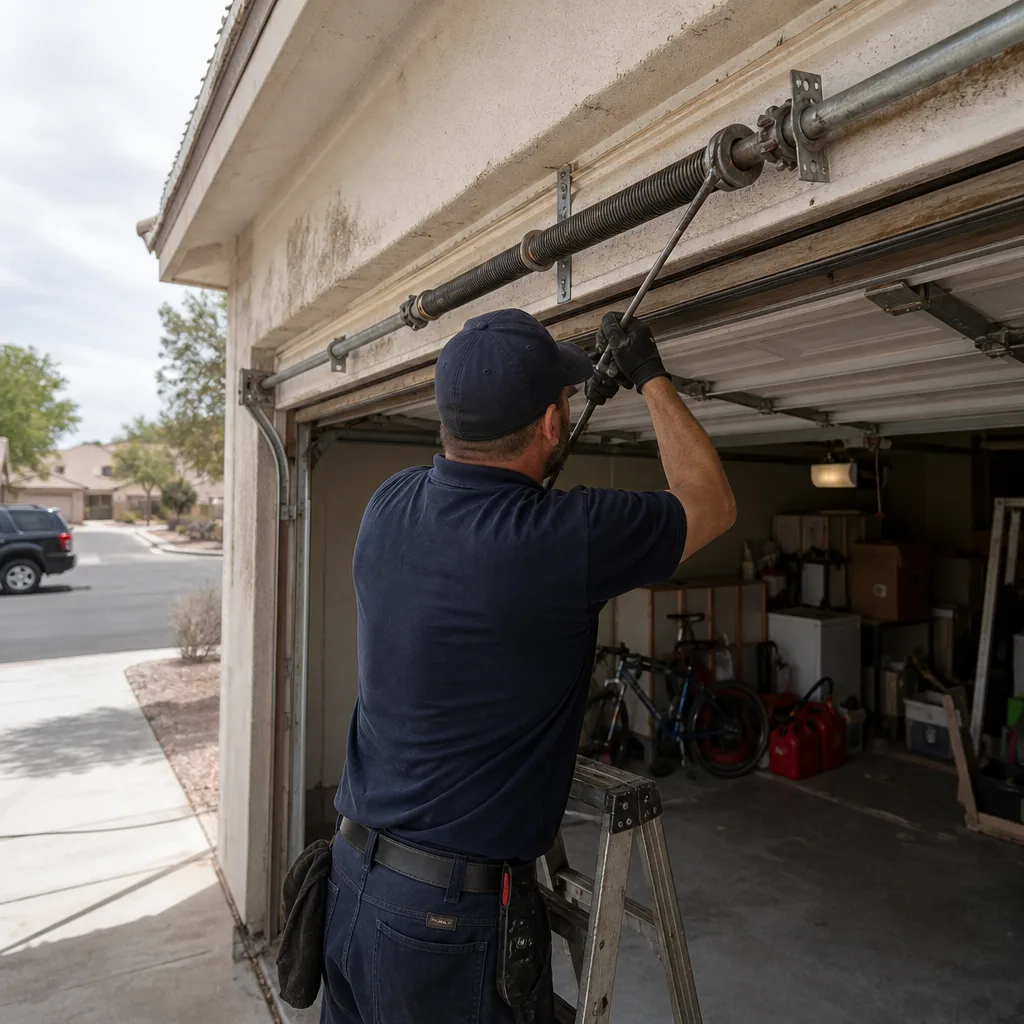 Before
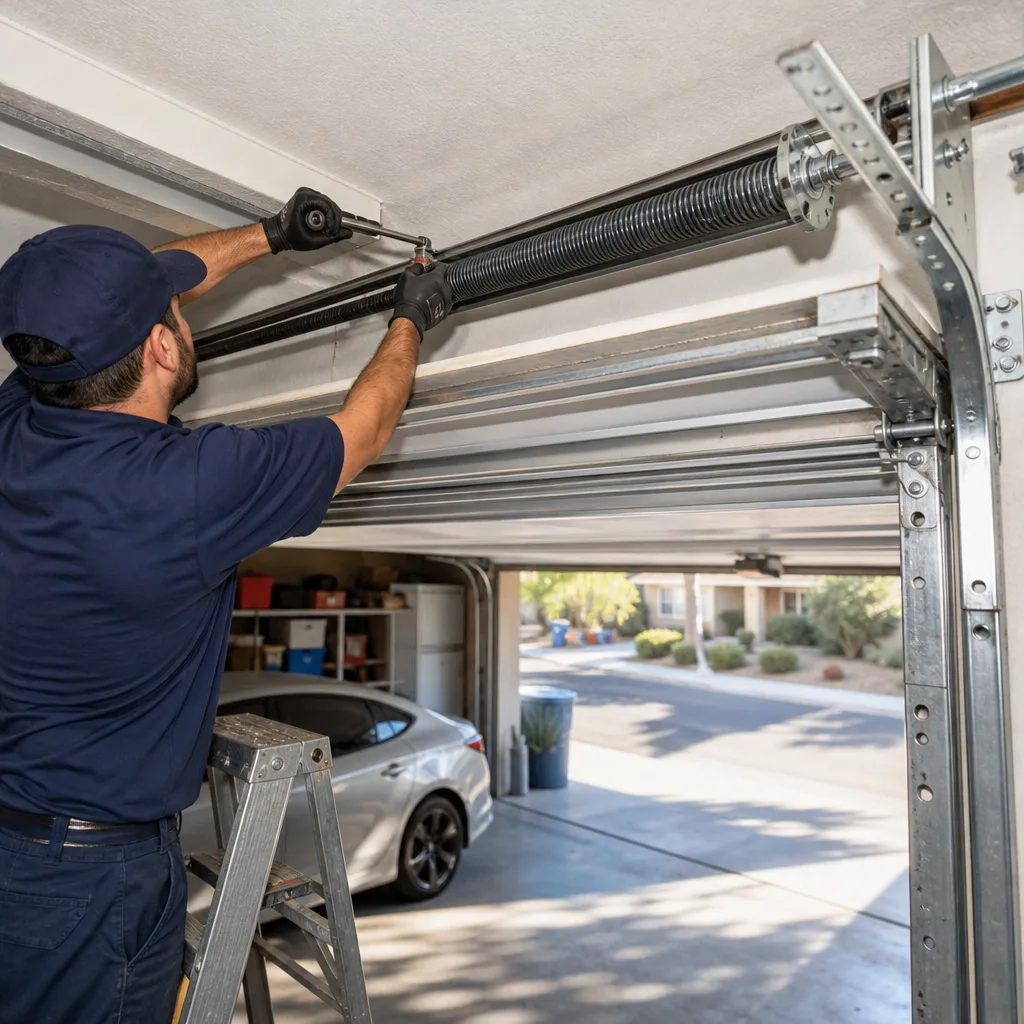 After
After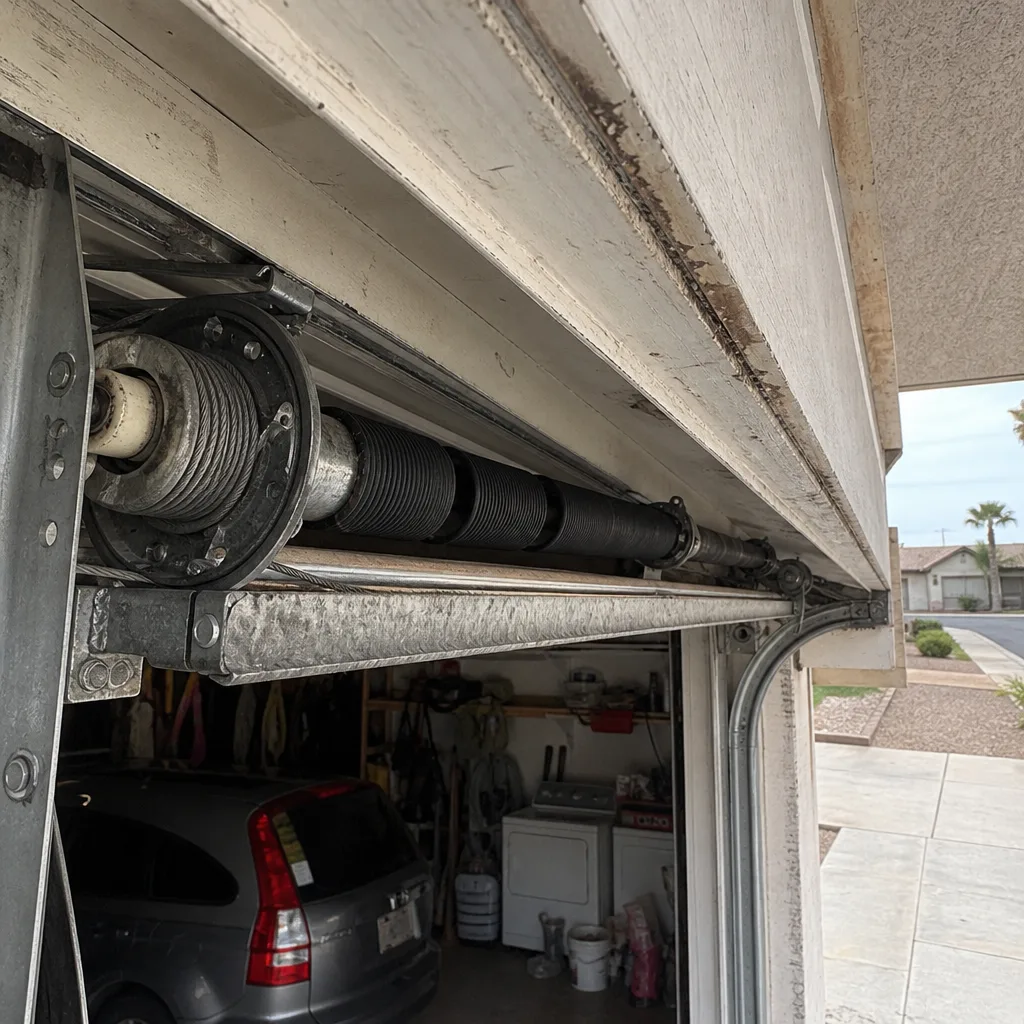 Before
 After
After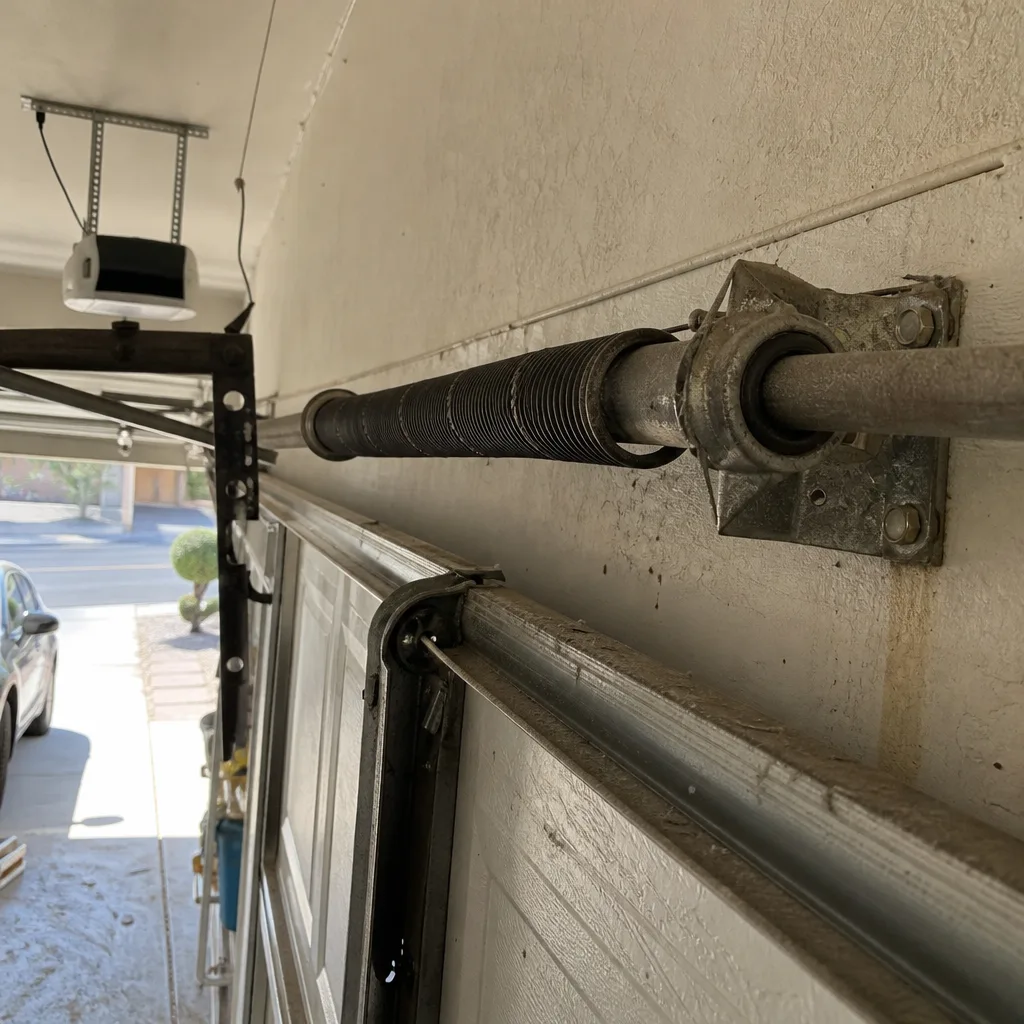 Before
 After
After